
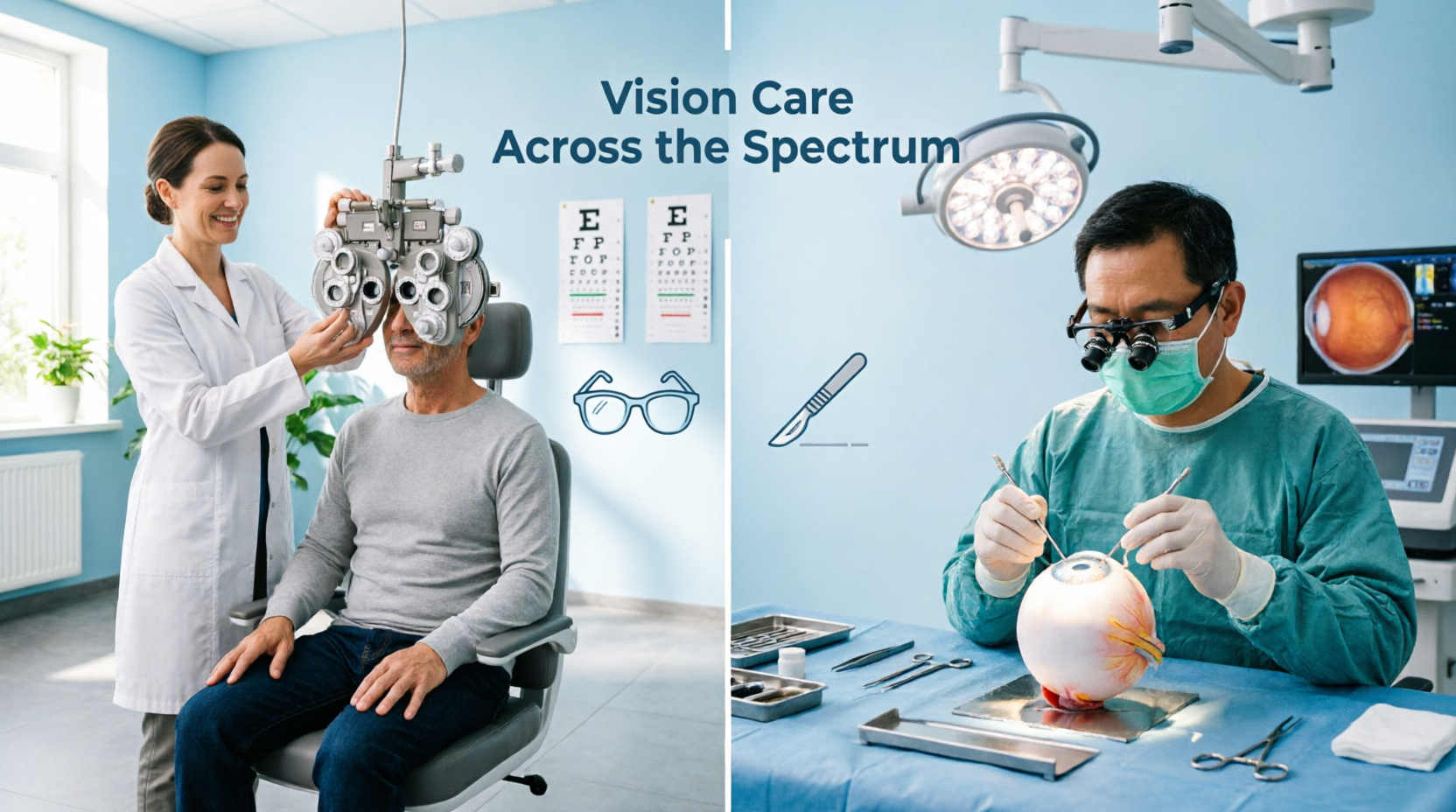
If your vision feels a little off or it is time for that annual checkup, you have probably wondered about the optometrist vs ophthalmologist question. Both professionals dedicate their careers to protecting your sight, yet they bring very different levels of training and tools to the exam room. Knowing the optometrist vs ophthalmologist distinction helps you skip the guesswork and head straight to the right expert for clearer, healthier eyes.
Think about it this way. Your eyes deserve care that matches the situation, whether you simply need updated glasses or you are facing something more complex, like early glaucoma. The optometrist vs ophthalmologist choice is not about one being better overall. It is about matching the right specialist to your specific vision care needs. This guide walks you through everything in plain language so you can feel confident the next time you book an appointment.
The Role of an Optometrist in Everyday Vision Care
An optometrist serves as your primary eye care provider for most day-to-day vision concerns. These doctors focus on comprehensive eye exams, prescribing corrective lenses, and detecting common issues before they worsen. They handle everything from routine vision tests to fitting contact lenses and offering basic treatment for minor eye irritations or dry eye syndrome.
You will often meet an optometrist first when you notice blurry vision while driving at night or when your child needs a school eye screening. They excel in primary vision care and, depending on state laws, can prescribe medications for certain eye conditions. Their approach feels approachable and preventive, much like visiting your family doctor for general health maintenance rather than rushing to a surgeon.
What Sets an Ophthalmologist Apart in Eye Health
An ophthalmologist brings advanced medical and surgical expertise to the table as a fully licensed physician. These specialists diagnose and treat a wide range of eye diseases, perform delicate operations, and manage complex conditions that go beyond routine care. They complete years of medical school plus specialized residency training focused entirely on the eyes.
Picture someone dealing with sudden vision changes from diabetic retinopathy or needing cataract removal. That is where an ophthalmologist steps in, with both diagnostic skills and the ability to perform surgery. Their training equips them to handle everything from laser procedures to full reconstructive eye surgery, giving patients access to the highest level of intervention when it matters most.
Education Paths Compared in Optometrist vs Ophthalmologist
The journey to becoming each type of eye doctor looks quite different in length and focus. Optometrists typically finish a four-year undergraduate degree followed by four years of optometry school, earning a Doctor of Optometry degree. Their education centers on vision science, eye anatomy, and non-surgical treatments.
Ophthalmologists follow a longer medical route that includes four years of college, four years of medical school, a one-year internship, and at least three years of ophthalmology residency. Many also complete an additional fellowship year in areas such as retina or corneal care. This extended path explains why ophthalmologists can offer surgical solutions while optometrists concentrate on primary vision care and detection.
A Detailed Comparison of Services and Capabilities
Understanding the practical differences helps you decide who to call first. Both professionals can perform thorough eye exams and prescribe glasses or contacts, yet their scopes diverge sharply when surgery or advanced disease management comes into play.
Here is a clear side-by-side look at what each brings to your vision care:
| Degree | Doctor of Optometry (OD) | Medical Doctor (MD) or Doctor of Osteopathy (DO) |
| Total Training | About 8 years after high school | 12+ years including residency and possible fellowship |
| Routine Eye Exams | Yes, primary focus | Yes, but often for referred or complex cases |
| Glasses & Contacts | Yes, full prescribing and fitting | Yes, though less emphasis on routine fittings |
| Medications | Limited prescriptions depending on state | Full range for all eye conditions |
| Surgery | Generally no (limited procedures in some states) | Yes, including cataract, LASIK, and glaucoma procedures |
| Complex Disease Care | Detection and referral | Full diagnosis, treatment, and ongoing management |
As the American Academy of Ophthalmology notes, ophthalmologists remain the only eye doctors with complete medical degrees and surgical training. This distinction matters when your situation moves past basic vision correction.
Deciding When to See an Optometrist
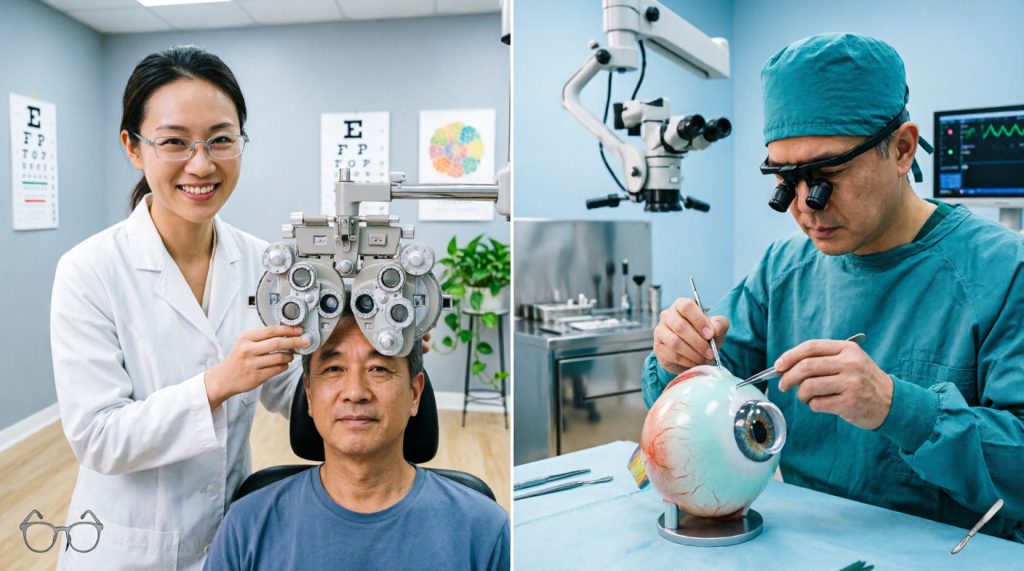
Start with an optometrist for regular checkups, new prescriptions, or mild symptoms like occasional dryness or slight blurriness. These visits work perfectly for updating your glasses, getting contact lens trials, or catching early signs of issues during a dilated exam. Many people build long-term relationships with their optometrist because the care feels consistent and convenient.
If you simply want peace of mind about your vision or need help with computer eye strain from long workdays, an optometrist provides exactly the right level of support. They also offer vision therapy for certain focusing problems and can refer you quickly if something needs deeper attention.
Knowing When an Ophthalmologist Is the Better Choice
Reach for an ophthalmologist when symptoms point to something more serious or when surgery becomes necessary. Sudden vision loss, flashing lights, severe eye pain, or a family history of conditions like macular degeneration all signal the need for their expertise. They also handle ongoing management of chronic diseases that require precise medical oversight.
Cataract surgery, glaucoma procedures, or retinal repairs fall squarely in their territory. Because they train extensively in operating rooms, ophthalmologists deliver outcomes that optometrists simply cannot provide on their own. When your eye health moves into medical or surgical territory, their specialized skills become essential.
How These Professionals Often Team Up for Your Benefit
Many patients benefit from a team approach rather than choosing strictly between the two. Your optometrist might detect early signs of glaucoma during a routine visit and refer you to an ophthalmologist for confirmation and treatment planning. After surgery, you often return to your optometrist for follow-up exams and prescription updates.
This collaboration creates seamless care. Optometrists act as the first line of defense and trusted partners, while ophthalmologists step in for advanced interventions. The result feels like having both a primary care doctor and a specialist working together on the same goal: protecting your sight for years to come.
Navigating Costs, Insurance Coverage, and Practical Factors
Money and insurance often influence the optometrist vs ophthalmologist decision in real life. Routine visits with an optometrist usually cost less out of pocket, especially when vision insurance applies. These appointments focus on preventive care and corrective lenses, making them more affordable for most families.
Ophthalmologist visits and procedures tend to run higher because of their medical training and surgical capabilities. Medical insurance typically covers them when you have a diagnosed condition, while vision plans handle routine optometrist care. Always check your specific plan and ask about in-network providers to avoid surprises. Location and wait times can also play a role, since ophthalmologists sometimes have longer schedules for complex cases.
Busting Myths Surrounding Optometrist vs Ophthalmologist
One common misconception claims that optometrists are not real doctors. In truth, they earn a doctoral degree and undergo rigorous clinical training focused on the eyes. Another myth suggests you should only see an ophthalmologist for anything serious. Many people receive excellent ongoing care from skilled optometrists who know when to bring in a specialist.
Some believe ophthalmologists never handle routine exams. While they can, their expertise shines brightest in surgical and disease management settings. Clearing up these misunderstandings helps you feel empowered rather than overwhelmed when booking your next eye appointment.
Choosing the Right Professional for Your Needs
Start by assessing your symptoms and goals. For everyday vision updates or preventive screenings, an optometrist offers convenient, high-quality care. When you face a diagnosed eye disease, need surgery, or experience sudden changes, an ophthalmologist provides the specialized path forward. Many people begin with their trusted optometrist and receive a smooth referral if advanced care is required.
Trust your instincts and do not hesitate to ask questions during scheduling. Both types of eye doctors want the same outcome: helping you see clearly and comfortably. The optometrist vs ophthalmologist conversation ultimately comes down to matching expertise with your current situation rather than picking one forever.
Conclusion
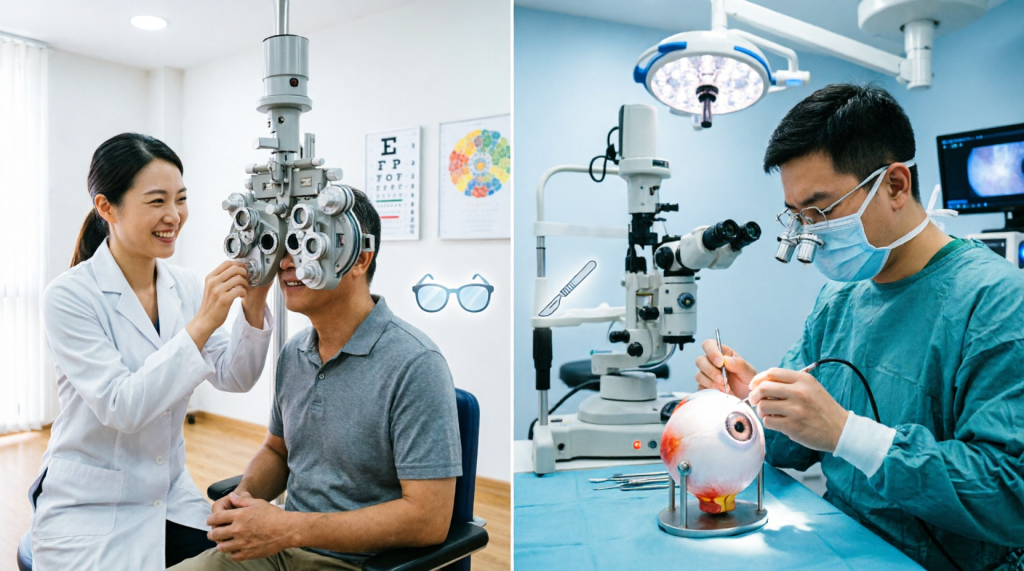
Understanding the optometrist vs ophthalmologist landscape empowers you to take charge of your vision health without confusion or delay. Both professionals bring valuable skills, yet their training and capabilities create natural lanes for different needs. Whether you need a simple prescription update or advanced surgical care, knowing who handles what saves time and protects your eyes for the long run. Schedule that appointment with confidence, and remember that regular vision care remains one of the smartest investments you can make in your overall well-being.
What training differences stand out most in the optometrist vs ophthalmologist comparison?
Optometrists complete roughly 8 years of education after high school to earn their Doctor of Optometry degree, with a strong emphasis on vision testing, lens prescriptions, and detecting common eye problems. Ophthalmologists invest 12 or more years, including medical school and residency, which prepare them for comprehensive medical diagnosis and complex eye surgery.
Can an optometrist perform the same surgeries as an ophthalmologist?
Generally no. Optometrists focus on non-surgical care and do not receive training for invasive eye operations such as cataract removal or retinal repairs. Ophthalmologists complete extensive surgical residencies that qualify them to perform these procedures safely and effectively when medical conditions require intervention.
When does it make sense to start with an optometrist instead of jumping straight to an ophthalmologist?
Routine eye exams, new glasses or contact lens prescriptions, mild dryness, or basic vision changes all fit perfectly with an appointment with an optometrist. These professionals provide accessible primary vision care and can quickly refer you for further evaluation if a deeper assessment is necessary, saving time and reducing expenses for everyday needs.
How do insurance plans typically cover optometrist vs ophthalmologist visits?
Vision insurance plans usually cover routine exams and corrective lenses through optometrists at lower out-of-pocket costs. Medical insurance covers ophthalmologist care for diagnosed conditions or surgery, though deductibles and copays still apply. Checking your specific benefits ahead of time prevents billing surprises.
Do optometrists and ophthalmologists ever work together on the same patient?
Yes, collaboration happens frequently and benefits patients greatly. An optometrist might detect early signs of disease during a regular visit and refer you to an ophthalmologist for specialized treatment or surgery. After procedures, you often return to your optometrist for ongoing monitoring and prescription updates, creating coordinated care.
What should I do if I am unsure which eye doctor to book first?
Begin with your regular optometrist for most situations, since they excel at comprehensive screenings and know your history. Describe your symptoms clearly when scheduling. If anything seems urgent, such as sudden vision loss or severe pain, seek ophthalmological care promptly or visit an emergency eye clinic for immediate attention.