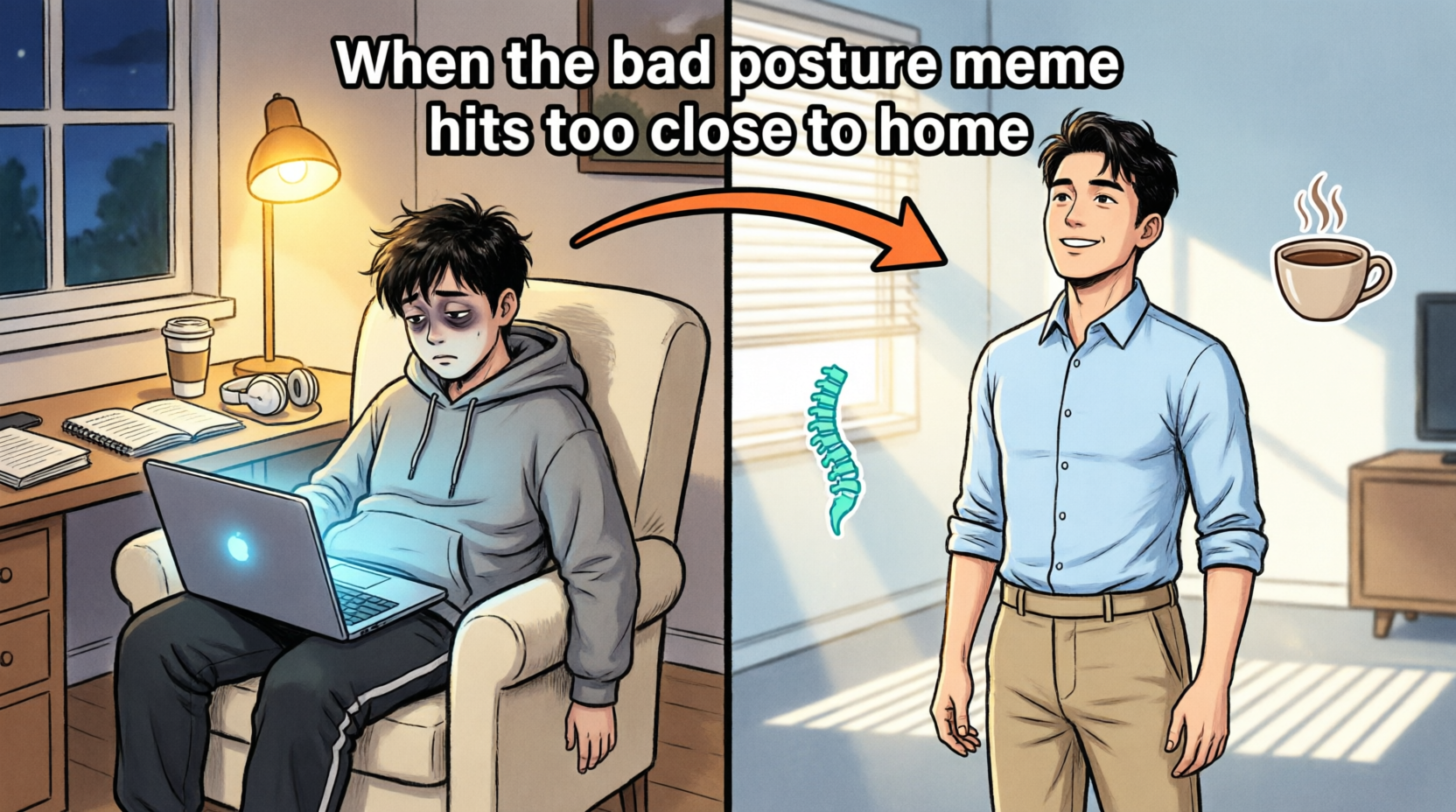
If you have spent any time scrolling through social media in the last couple of years, you have probably come across the bad posture meme at least once. These clever images and short videos poke fun at the way so many of us hunch over phones, laptops, or steering wheels without even noticing. What started as lighthearted comedy has grown into something bigger, reflecting the daily reality of millions living in a screen-heavy world. The bad posture meme works because it feels familiar, turning an everyday habit into something we can all laugh about together.
Yet the humor carries a deeper layer. Behind every exaggerated slouch in these memes sits a genuine conversation about how modern life affects our bodies. People share the bad posture meme not just for the laughs but because it sparks that moment of recognition. You see the cartoon figure melting into a chair and suddenly remember your own aching shoulders after a long workday. This blend of comedy and subtle awareness has turned the bad posture meme into a cultural touchpoint that keeps showing up in feeds everywhere.
The Origin and Spread of the Bad Posture Meme Across Platforms
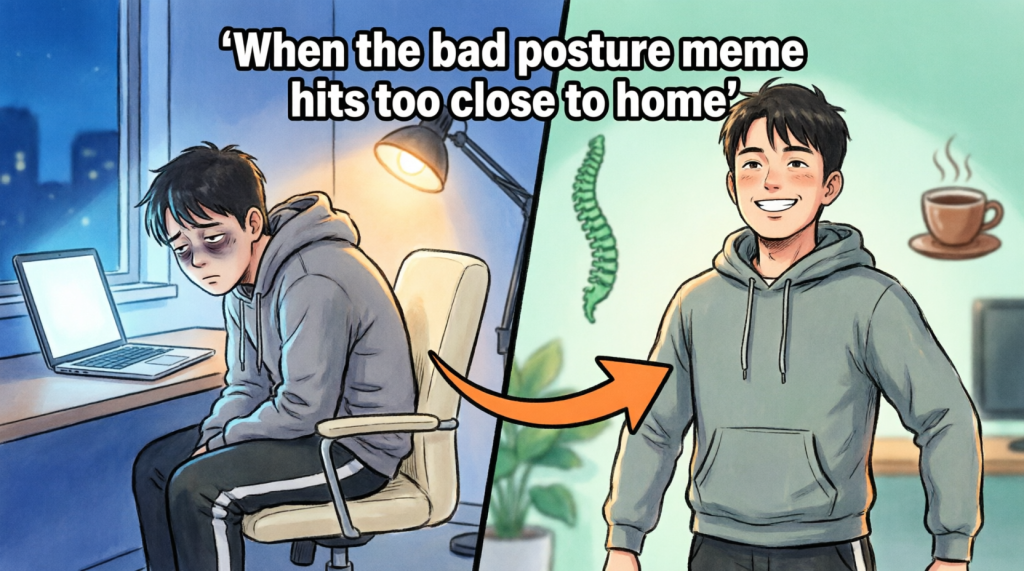
The bad posture meme did not appear overnight. It grew from simple illustrations that creators shared to highlight the contrast between how we actually sit and how we should sit. Early versions often depicted a person dramatically collapsing forward rather than standing tall like a confident hero. Viewers connected instantly because almost everyone has experienced that sinking feeling after hours in front of a screen. The format proved easy to adapt, which helped the bad posture meme travel quickly from one platform to another.
Soon enough, the trend picked up speed on TikTok and Instagram, where short clips showed real people acting out the meme in their own homes or offices. Someone would start in a perfect slouch, then dramatically correct themselves while text popped up on screen. These versions felt relatable and shareable, pushing the bad posture meme into mainstream feeds. Influencers and everyday users alike jumped on board, mixing the humor with quick tips or just pure comedy. Before long, typing the phrase into any search bar delivered endless results, proving how widely the bad posture meme had caught on.
What made the spread even faster was how easily it fit into existing meme culture. People began pairing the bad posture meme with other popular formats, such as reaction images and before-and-after sequences. The core idea stayed simple yet powerful. It reminded viewers that bad posture is not just a personal quirk but something almost everyone deals with in the digital age. That shared experience turned casual scrolls into moments of connection and, for some, the first nudge toward making a change.
Why the Bad Posture Meme Feels So Relatable to Modern Life
The bad posture meme strikes a chord because it captures the quiet struggle of balancing work, entertainment, and comfort all at once. In an era when many jobs require long hours at a desk and leisure time often involves more screens, slouching becomes the default position without anyone planning it. The meme exaggerates this reality just enough to make it funny while still feeling true. Viewers laugh because they recognize their own bodies in the image, whether it is the forward head tilt or the rounded shoulders.
Beyond the humor, the bad posture meme also reflects bigger shifts in how society talks about wellness. Instead of dry medical advice, the trend delivers its message through approachable comedy. It lowers the barrier for people who might otherwise ignore talks on posture. When a funny video shows someone dramatically fixing their slouch mid-meme, it plants a seed that good alignment matters without preaching. This light touch explains why the bad posture meme keeps resurfacing even as new trends come and go.
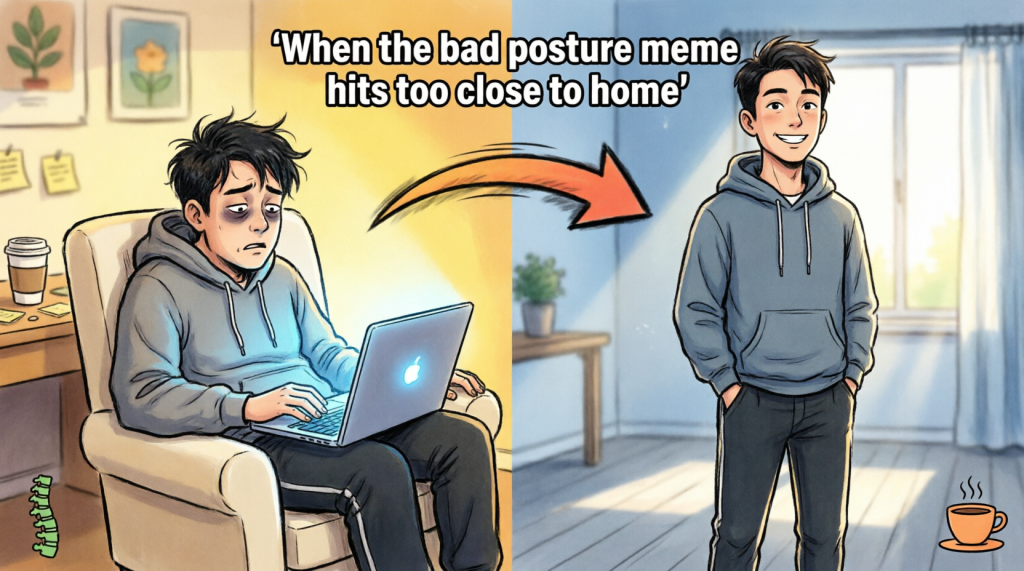
Another reason for its staying power lies in the content’s visual nature. A single image can convey what paragraphs of text struggle to explain. The exaggerated curves and tired expressions in the bad posture meme make the point instantly. At the same time, the contrast with an upright version offers a quick visual goal. Viewers walk away entertained yet slightly more aware of how they are sitting. That combination of fun and subtle education keeps the conversation alive across different age groups and lifestyles.
The Real Health Side of What the Bad Posture Meme Jokes About
While the bad posture meme delivers laughs, it also highlights real physical effects that deserve attention. Prolonged slouching can strain muscles in the neck and upper back, leading to stiffness that builds over time. Many people notice headaches or shoulder tension that traces back to hours spent leaning forward. The meme turns these issues into comedy, yet the underlying message reminds viewers that small daily habits add up.
Research in ergonomics shows that a consistently forward-head posture places additional load on the spine. Over months or years, this can contribute to discomfort during everyday movements, such as reaching for something on a high shelf. The bad posture meme often highlights these scenarios humorously, making the information easier to absorb. Viewers who laugh at the exaggerated version may later pause and adjust their own setup at the desk.
Mental focus can take a hit, too, when posture suffers. When the body collapses forward, breathing becomes slightly more restricted, which some people link to feeling more tired during the afternoon slump. The bad posture meme captures that droopy energy perfectly, turning a common complaint into shareable content. By laughing at it together, communities start to notice patterns in their own routines and talk more openly about small improvements.
Here is a simple comparison that shows how the funny side of the bad posture meme lines up with everyday outcomes:
| Dramatic forward slump | “This is my final form” | Increased neck strain and possible headaches |
| Rounded shoulders at desk | “Power pose activated” | Tight chest muscles and reduced shoulder mobility |
| Phone neck tilt | “Just one more scroll” | Extra pressure on cervical spine over time |
| Chair melting posture | “Gravity is my best friend” | Lower back discomfort after long sitting periods |
This table keeps the spirit of the bad posture meme while grounding it in practical observations. It shows why so many people keep sharing these images even as they quietly start sitting a little taller.
Turning Bad Posture Meme Laughs into Simple Daily Fixes
The best part about the bad posture meme is how it can spark real action without feeling overwhelming. Many viewers finish watching one and immediately try a quick shoulder roll or sit up straighter in their chair. That immediate response turns passive scrolling into an active moment of self-check. Over time these small adjustments add up and reduce the very habits the meme pokes fun at.
One effective starting point is to set gentle reminders throughout the day. A phone alarm labeled something playful, like “Posture check, no meme edition,” can interrupt long slouching sessions. The bad posture meme often shows the dramatic version of what happens without these pauses, so the reminder feels like a friendly inside joke rather than a chore. Pairing the alert with a short stretch keeps the energy light while still delivering results.
Another approach focuses on workspace setup. Raising a monitor to eye level or using a supportive chair cushion can make it easier to maintain good alignment without constant thought. People inspired by the bad posture meme sometimes share their own before-and-after desk photos, keeping the trend positive and solution-oriented. These practical tweaks do not require expensive equipment, just a willingness to experiment until the body feels supported instead of collapsed.
Consistency matters more than perfection here. Even remembering to check posture once or twice during a busy afternoon can prevent the deeper aches the bad posture meme exaggerates for laughs. Many who started paying attention after seeing the trend report felt more energized and less stiff by the end of the week. The meme provides the relatable hook, while these small habits turn awareness into lasting change.
What Comes Next for the Bad Posture Meme and Wellness Conversations
As awareness grows, the bad posture meme continues to evolve rather than fade away. New creators add fresh twists, such as combining it with work-from-home realities or gaming setups. The core appeal remains the same: it makes a health topic feel human and funny instead of clinical. This evolution keeps the conversation fresh and relevant for new audiences discovering it for the first time.
At the same time, wellness brands and physical therapists have started referencing the trend in their own content. They use the bad posture meme style to deliver quick tips that feel less like lectures and more like friendly advice from a meme-savvy friend. This crossover shows how comedy can open doors to serious topics without losing engagement. Viewers who first met the idea through humor may later seek out more detailed guidance because the initial entry point felt approachable.
Looking ahead, the bad posture meme may inspire even more creative formats, such as interactive challenges or community posts where people share their own funny corrections. The trend proves that when humor meets helpful information, people pay attention longer and act on it more willingly. That lasting impact turns a simple viral joke into a gentle nudge toward better daily habits for anyone who has ever felt called out by their own slouch.
In the end, the bad posture meme succeeds because it holds up a mirror without judgment. It lets us laugh at a shared struggle while quietly encouraging us to stand a little taller. Whether you scroll past it for the comedy or use it as motivation to adjust your chair, the trend has carved out a unique space where entertainment and self-care overlap. Next time one appears in your feed, take a second to notice how you are sitting at that moment. You might just catch yourself smiling and straightening up at the same time.
FAQ
What exactly is the bad posture meme, and why did it become popular?
The bad posture meme refers to humorous images, videos, and illustrations that exaggerate the way people slouch over devices or sink into chairs during daily routines. It gained popularity because it captures a universal experience in the digital age, where screens dominate work and leisure time. Viewers instantly relate to the tired expressions and collapsed postures, turning a common physical habit into shareable comedy that spreads quickly across platforms.
Can the bad posture meme actually encourage people to improve their posture?
Yes, many viewers report that seeing the bad posture meme prompts an immediate self-check and a quick adjustment in their sitting posture. The lighthearted approach lowers resistance to health advice, making the message stick better than straightforward warnings. Over time, repeated exposure to funny content can build awareness that leads to consistent small changes like a better desk setup or periodic stretches.
Are there long-term consequences if someone ignores the message behind the bad posture meme?
Ignoring the habits highlighted in the bad posture meme can contribute to ongoing muscle tension, reduced mobility, and the gradual building of discomfort. The exaggerated versions in memes reflect real patterns that affect breathing efficiency and spinal alignment when left unchecked for months or years. Addressing the issue early through simple awareness often prevents these effects from becoming more noticeable in everyday movement.
How can someone use the bad posture meme as motivation without feeling overwhelmed?
Treating the bad posture meme as a playful reminder rather than criticism helps keep the process light. Viewers can set gentle phone alerts with fun labels or try quick posture resets inspired by the meme’s before-and-after style. Focusing on one or two easy adjustments at a time, such as monitor height or shoulder rolls, turns the humor into practical steps that feel manageable rather than a full lifestyle overhaul.
Do any products or apps tie into the bad posture meme trend for extra support?
Some apps now include posture reminders styled with meme-like humor to make tracking feel less clinical and more engaging. Wearable devices that gently vibrate during prolonged slouching also draw indirect inspiration from the trend, turning awareness into an interactive experience. These tools build on the relatable energy of the bad posture meme while offering measurable feedback for users who want structured help alongside the laughs.